
The BeNeering Ticket System
The BeNeering ticket system is your central point of contact for submitting requests, reporting issues, and tracking ongoing topics related to your collaboration with us.
You can access the ticket system via the BeNeering ticket system link. This link is provided in your initial invitation email. Alternatively, you can open the system directly using the web address https://service.beneering.com/ at any time.
Once you log in, you will be directed to the start page of the ticket system. From here, you can:
-
Create new tickets for support requests or inquiries
-
View and track the status of your existing tickets
-
Communicate directly with our support team within each ticket
-
Access relevant information and updates related to your requests
The ticket system ensures that all communication is structured, transparent, and traceable, allowing us to process your requests efficiently and provide timely support.
Create a ticket
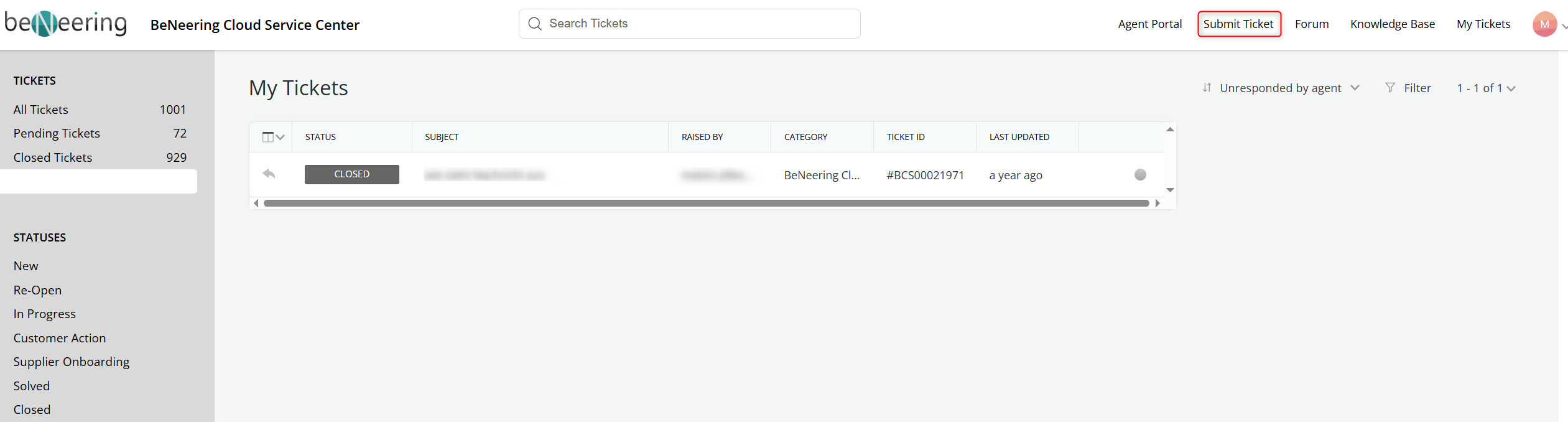
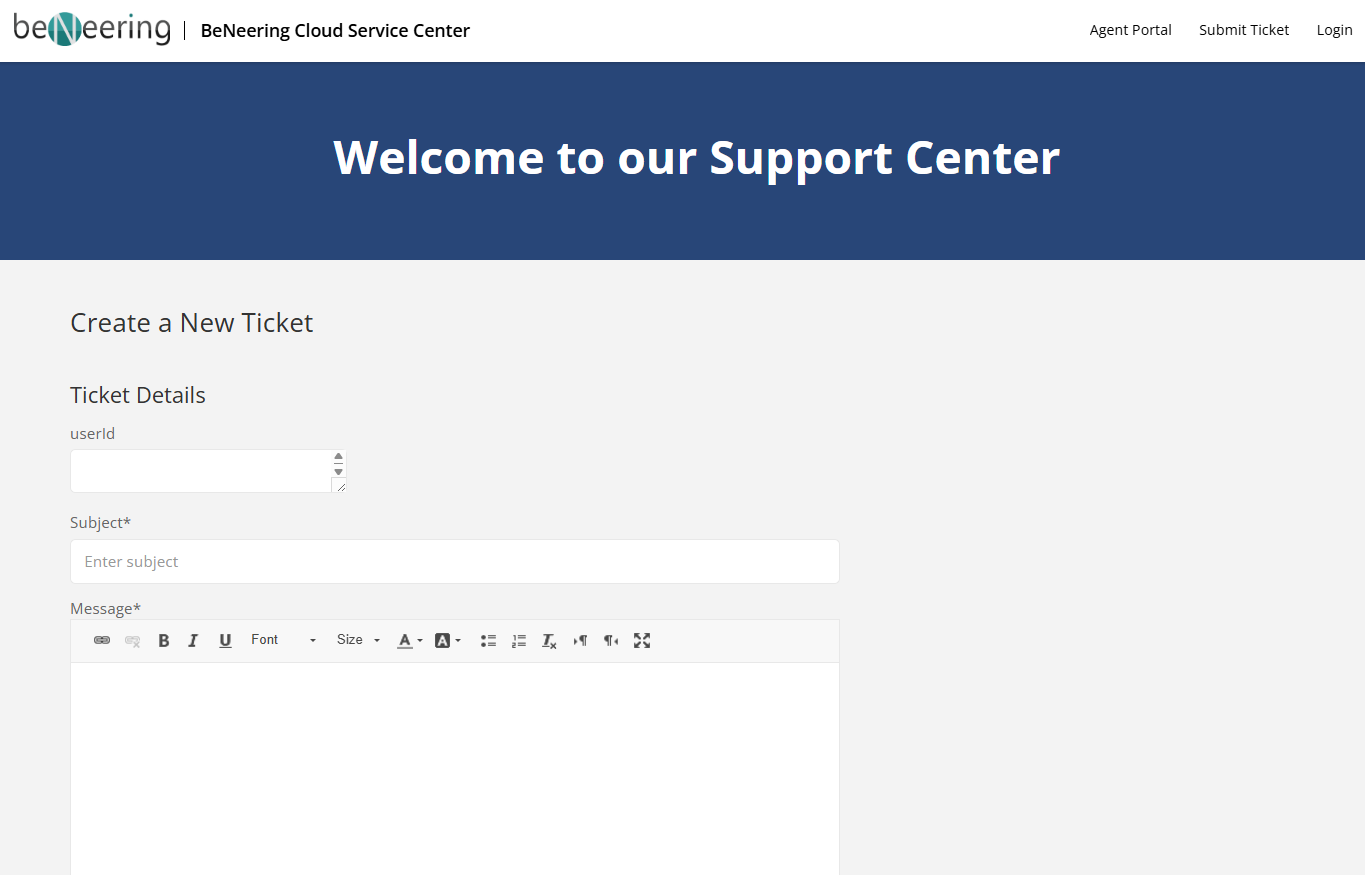
To create a ticket, log in to https://service.beneering.com and click the “Submit Ticket” button in the top-right corner. You will then be directed to the https://service.beneering.com/new/ page, where you can enter all relevant details for your request.
Help us process your ticket faster
To help us process your ticket quickly and efficiently, please include as much relevant information as possible. Key details that are especially helpful include:
-
System / Module: e.g., SRM, Catalog, SES, RFX
-
Browser & OS: e.g., Chrome 117 on Windows 11
-
Users Affected: One or multiple (please specify how many)
-
Steps Taken: What actions you performed (step-by-step)
-
Current Behavior: What happened (include error messages and/or screenshots)
-
Expected Behavior: What you expected to happen
-
Extra Information: IDs (ContainerID, UserID, ViewID, ItemID), timestamps, logs, files
Providing these details allows our support team to quickly understand the context and reproduce the issue, significantly speeding up resolution.
Priority
When creating a ticket, you have the option to assign a priority level. The initial priority is set by the ticket creator. However, BeNeering Support may review and adjust the priority to reflect the actual urgency and impact of the issue.
In accordance with the standard Service Level Agreements (SLAs) of BeNeering GmbH, the following priority classifications apply:
|
Priority |
Name |
Example |
|
1 |
System not available |
Application unavailability. If "any" country or department within a country is not working, the service is not available or is responding. |
|
2 |
Priority High |
Incident that prevents the effective use of the system and affects a large number of users or causes inconvenience to all users of the system. A catalog with a maximum of 100,000 items does not work. |
|
3 |
Priority middle |
Problems and incidents related to single or few users. This includes service requests like creating a new web form, a catalog with over 100,000 items does not work, a punch-out catalog does not work, etc. |
|
4 |
Priority low |
Issues and incidents related to individual users that have a workaround in place. This priority also includes more complex service requirements. |
|
5 |
Change Request |
Change requests from the customer. The delivery time must be planned and depends on the planning of the Catalog Cloud releases and the hotfix planning. |